Original: $42,000.00
-70%$42,000.00
$12,600.00The Story
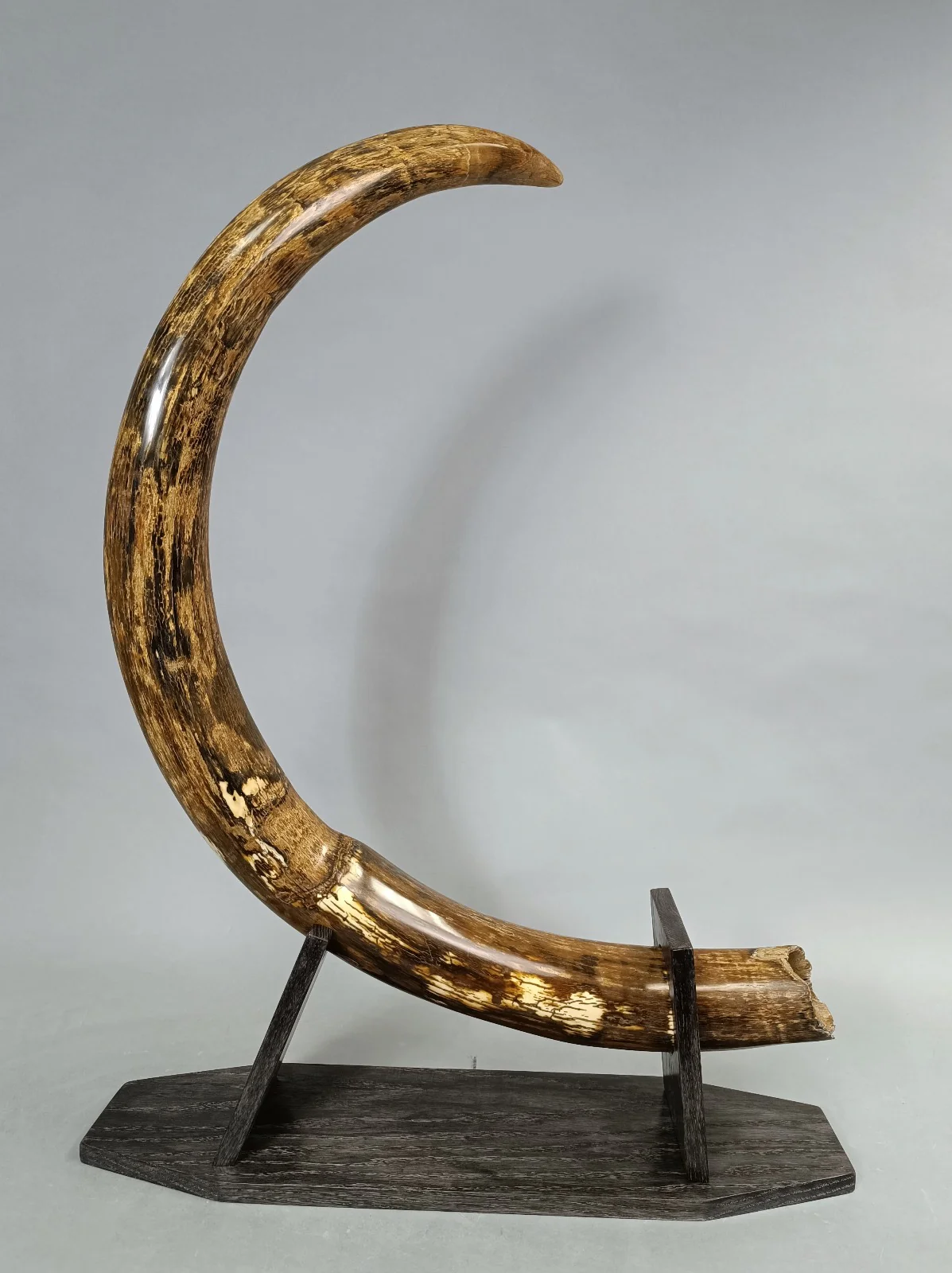
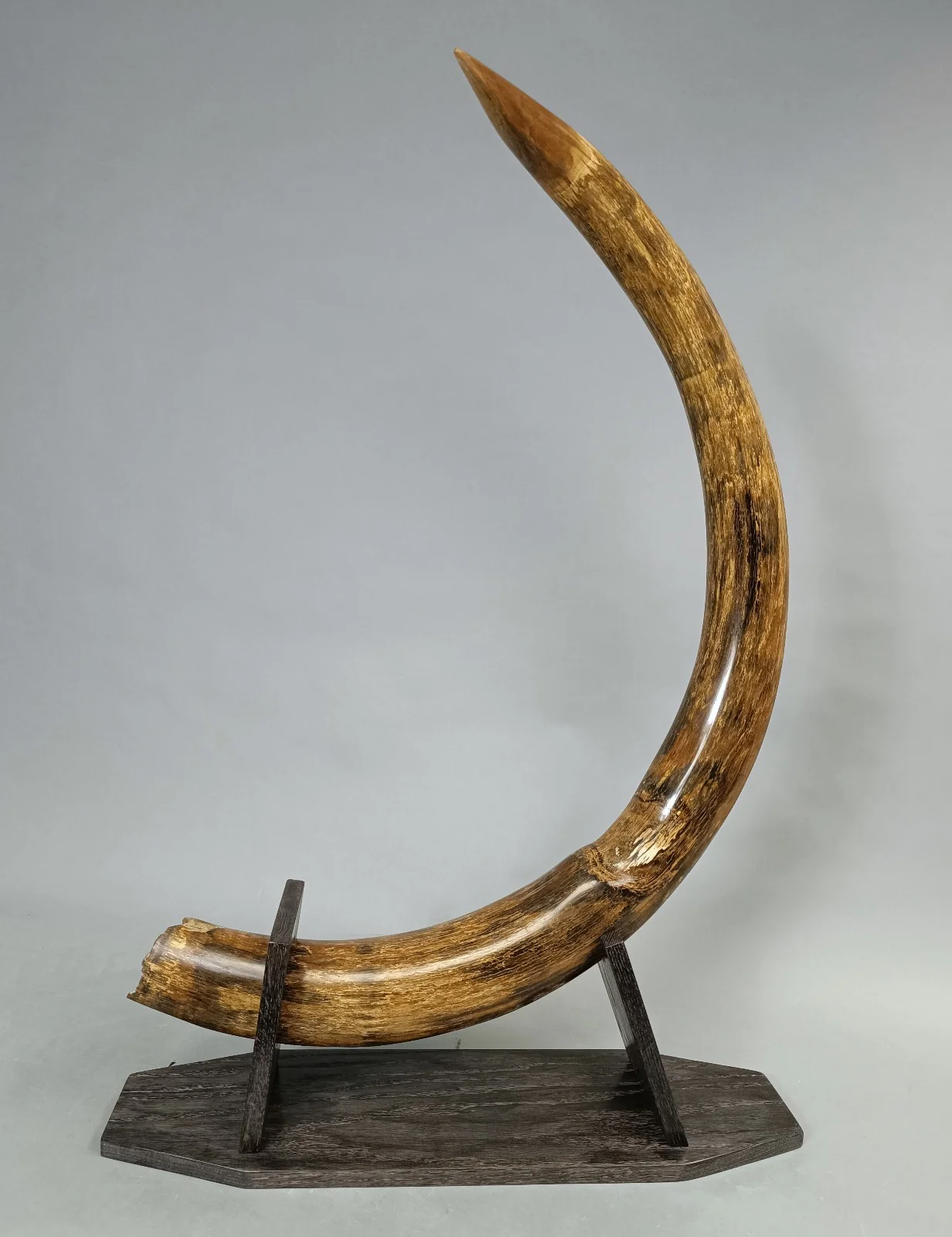
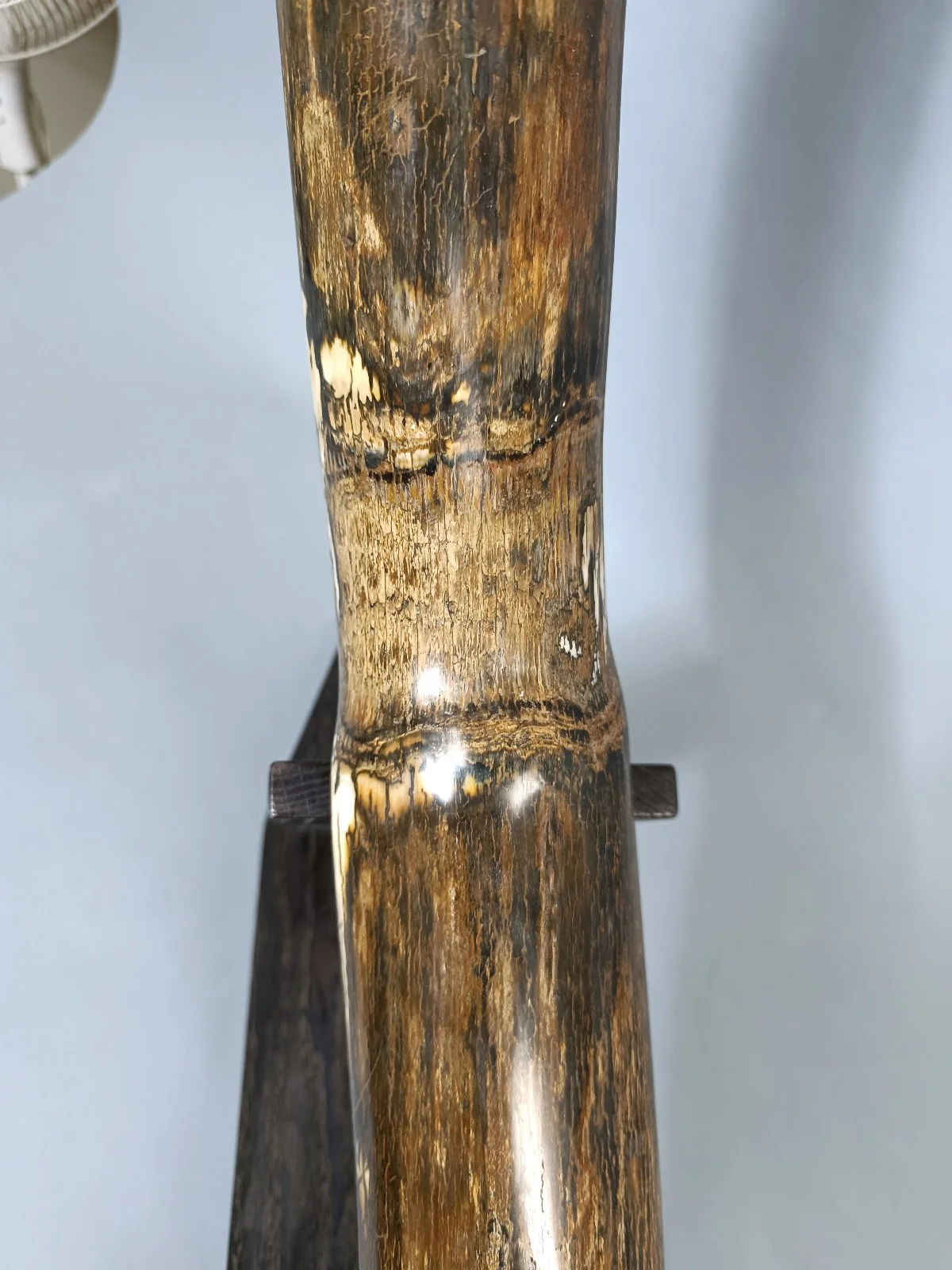
Despite the modest size of this pair, it belongs to an older male. (The tusks of woolly mammoths of this age are typically more than 8 feet long and 100 pounds in weight). This is indicated by a very shallow internal pulpal cavity and a fairly deep depression in the middle of the tusk where it comes into contact with the upper lip. The tusks of mammoths grew throughout their lives, very quickly at a young age and very slowly in old age. The depression in the tusk is formed overtime by eating, and could not have formed in a younger animal due to its rapid growth. These tusks are of a dwarf variety of woolly mammoth that are found on the islands of Wrangel (Chukotka) and St. Paul (Alaska), as well as in Yakutia. The results of genetic analysis showed that this variety was not a separate species like other dwarf mammoth mammoths, but was in fact a dwarf subspecies of the woolly mammoth.
Due to the fact that their tusks are likely mistaken for tusks of a younger animal, their presence of this subspecies was not recorded. The appearance of the dwarf variety may have been a result of climate warming, which led to the relocation to the steppes, where their large relatives lived, with taiga and swampy tundra, where feeding and movement were easier for small mammoths.
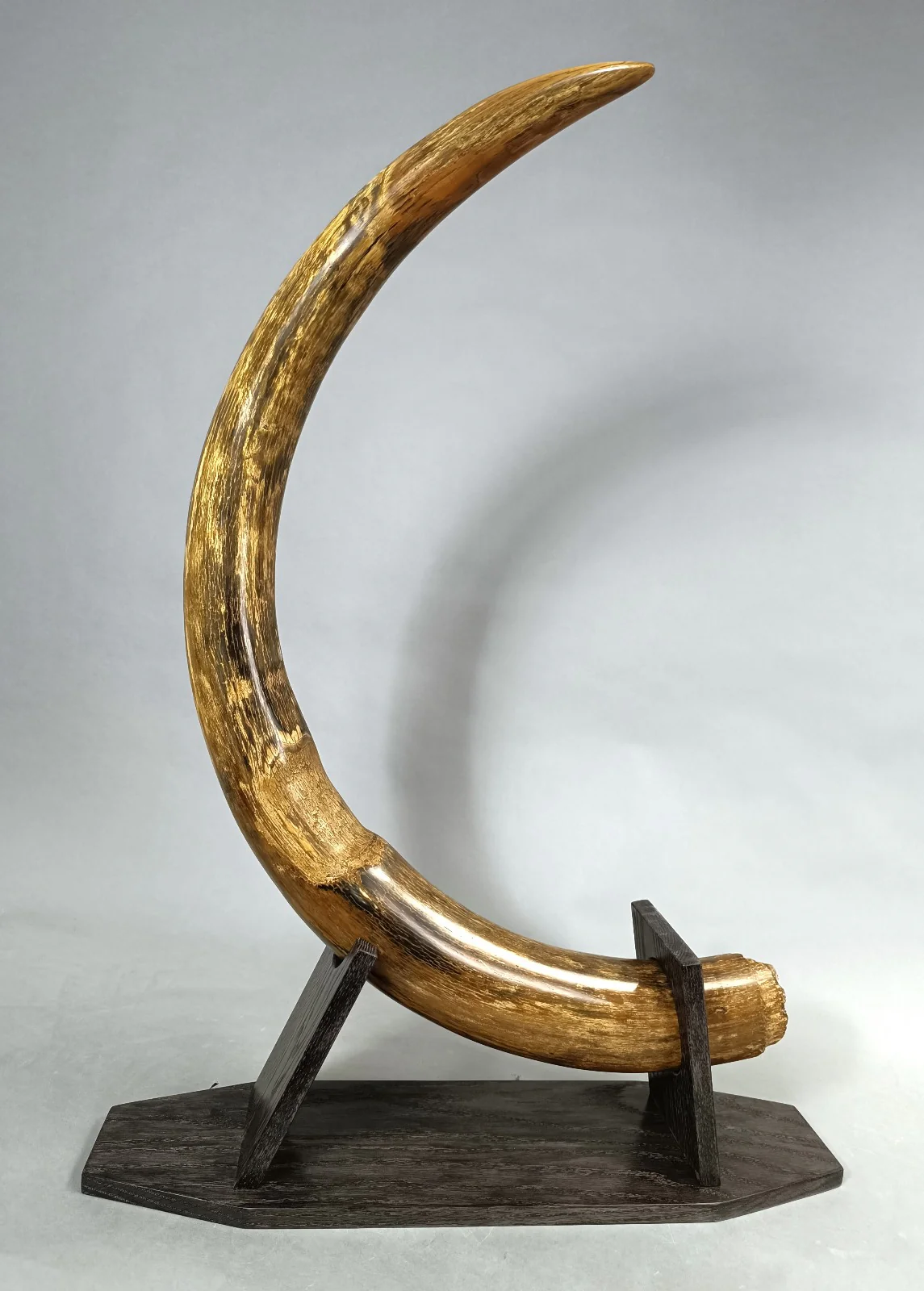
A custom-made stained solid oak stand showcases this Ice Age treasure’s beautiful curvature.
Left measures 63" long and 3.9"in diameter, it weighs 24lbs
Please contact us to arrange a shipping quote
All of our mammoth tusks have been professionally stabilized; however, these specimens must be kept in an indoor environment with stable humidity and temperature. Ideal conditions are 50% to 60% humidity and 68 to 78 degrees Fahrenheit.
Species: Mammuthus primigenius (Woolly mammoth)
Location: Southwestern Siberia, in the Kemerovo region.
Age: Late Pleistocene
Fossil mammoth ivory can be distinguished from present-day elephant ivory by the angle of crosshatching (Schreger lines) and can be traded internationally.
NOTE: due to present restrictions we cannot ship to California, New York, New Jersey, Hawaii, Nevada, Illinois or New Hampshire

Model of woolly mammoth at Royal BC Museum. Source: Wikipedia

Details & Craftsmanship
Every detail has been carefully considered to bring you the perfect product.
Details & Craftsmanship
Every detail has been carefully considered to bring you the perfect product.
Details & Craftsmanship
Every detail has been carefully considered to bring you the perfect product.

Details & Craftsmanship
Every detail has been carefully considered to bring you the perfect product.

Details & Craftsmanship
Every detail has been carefully considered to bring you the perfect product.
Details & Craftsmanship
Every detail has been carefully considered to bring you the perfect product.

Details & Craftsmanship
Every detail has been carefully considered to bring you the perfect product.
Details & Craftsmanship
Every detail has been carefully considered to bring you the perfect product.

Details & Craftsmanship
Every detail has been carefully considered to bring you the perfect product.
Description
Despite the modest size of this pair, it belongs to an older male. (The tusks of woolly mammoths of this age are typically more than 8 feet long and 100 pounds in weight). This is indicated by a very shallow internal pulpal cavity and a fairly deep depression in the middle of the tusk where it comes into contact with the upper lip. The tusks of mammoths grew throughout their lives, very quickly at a young age and very slowly in old age. The depression in the tusk is formed overtime by eating, and could not have formed in a younger animal due to its rapid growth. These tusks are of a dwarf variety of woolly mammoth that are found on the islands of Wrangel (Chukotka) and St. Paul (Alaska), as well as in Yakutia. The results of genetic analysis showed that this variety was not a separate species like other dwarf mammoth mammoths, but was in fact a dwarf subspecies of the woolly mammoth.
Due to the fact that their tusks are likely mistaken for tusks of a younger animal, their presence of this subspecies was not recorded. The appearance of the dwarf variety may have been a result of climate warming, which led to the relocation to the steppes, where their large relatives lived, with taiga and swampy tundra, where feeding and movement were easier for small mammoths.
A custom-made stained solid oak stand showcases this Ice Age treasure’s beautiful curvature.
Left measures 63" long and 3.9"in diameter, it weighs 24lbs
Please contact us to arrange a shipping quote
All of our mammoth tusks have been professionally stabilized; however, these specimens must be kept in an indoor environment with stable humidity and temperature. Ideal conditions are 50% to 60% humidity and 68 to 78 degrees Fahrenheit.
Species: Mammuthus primigenius (Woolly mammoth)
Location: Southwestern Siberia, in the Kemerovo region.
Age: Late Pleistocene
Fossil mammoth ivory can be distinguished from present-day elephant ivory by the angle of crosshatching (Schreger lines) and can be traded internationally.
NOTE: due to present restrictions we cannot ship to California, New York, New Jersey, Hawaii, Nevada, Illinois or New Hampshire
Model of woolly mammoth at Royal BC Museum. Source: Wikipedia