Original: $9,999,999.00
-70%$9,999,999.00
$2,999,999.70The Story
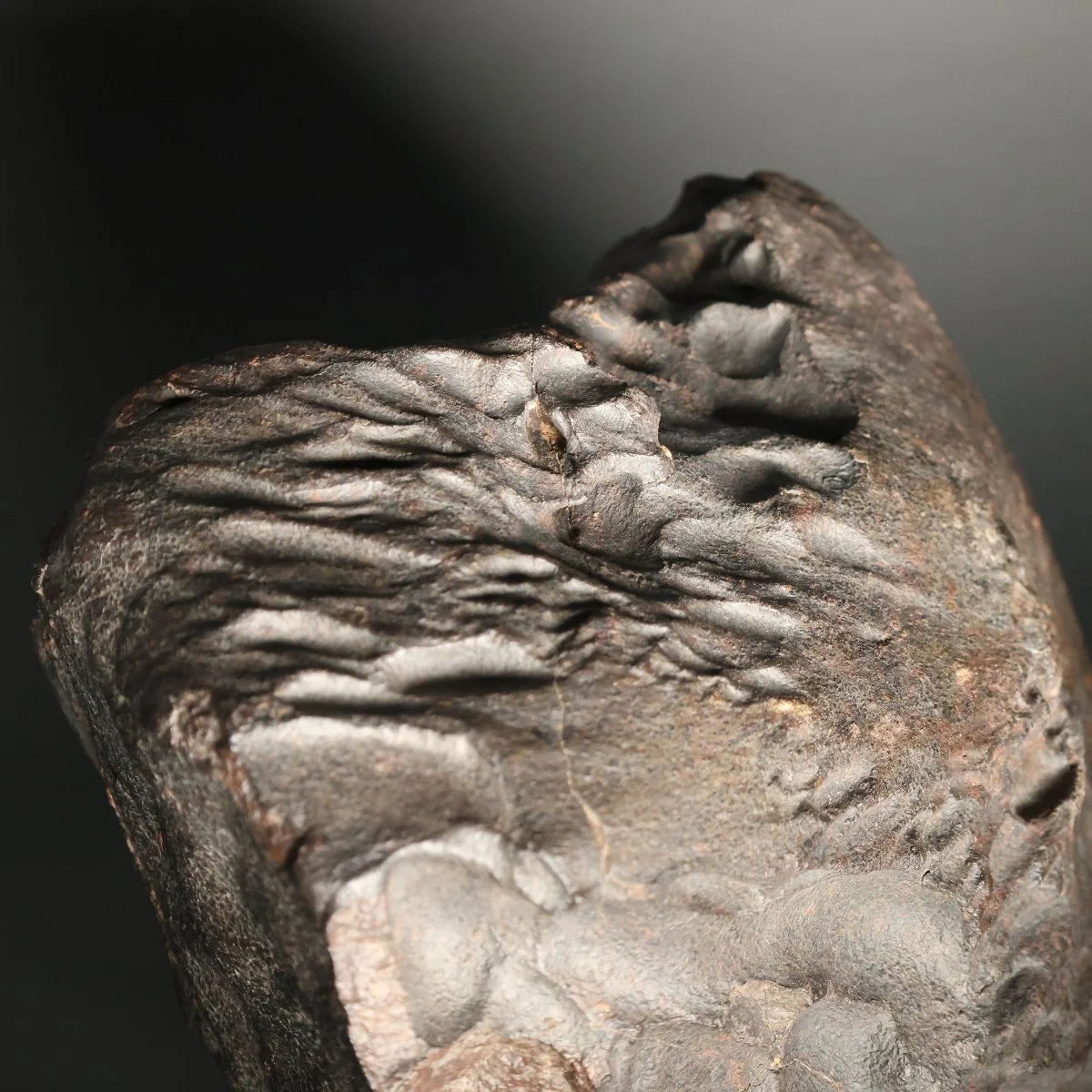
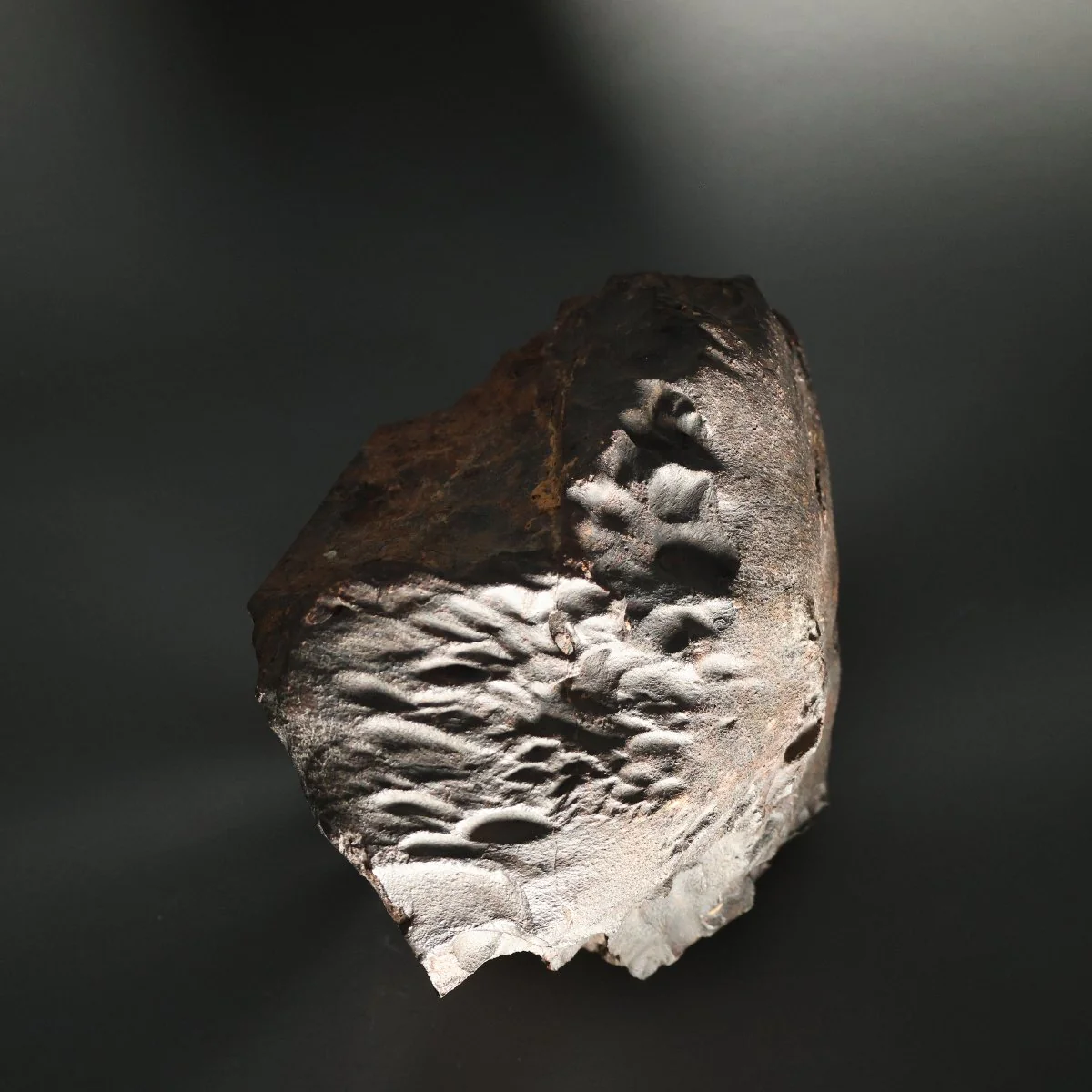
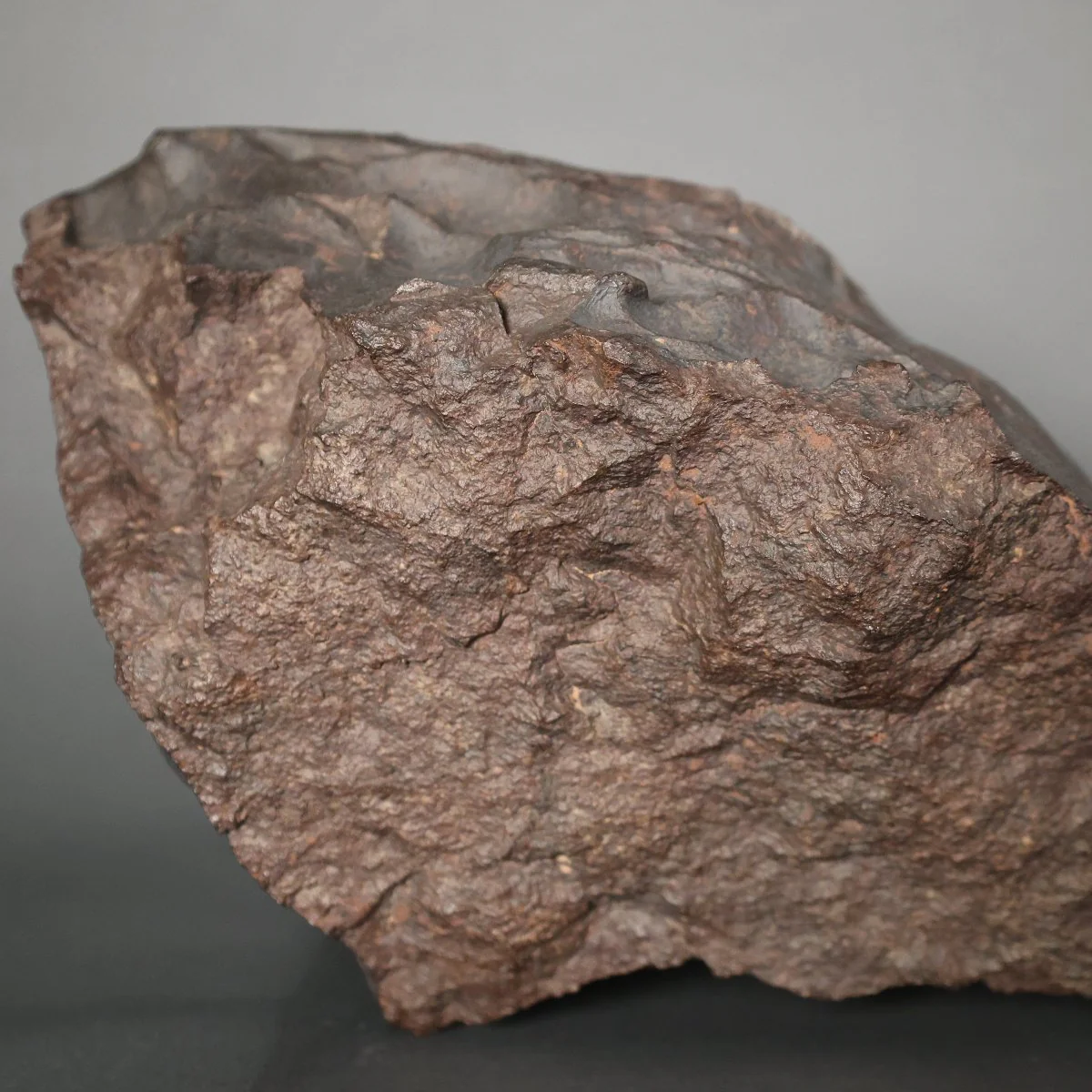
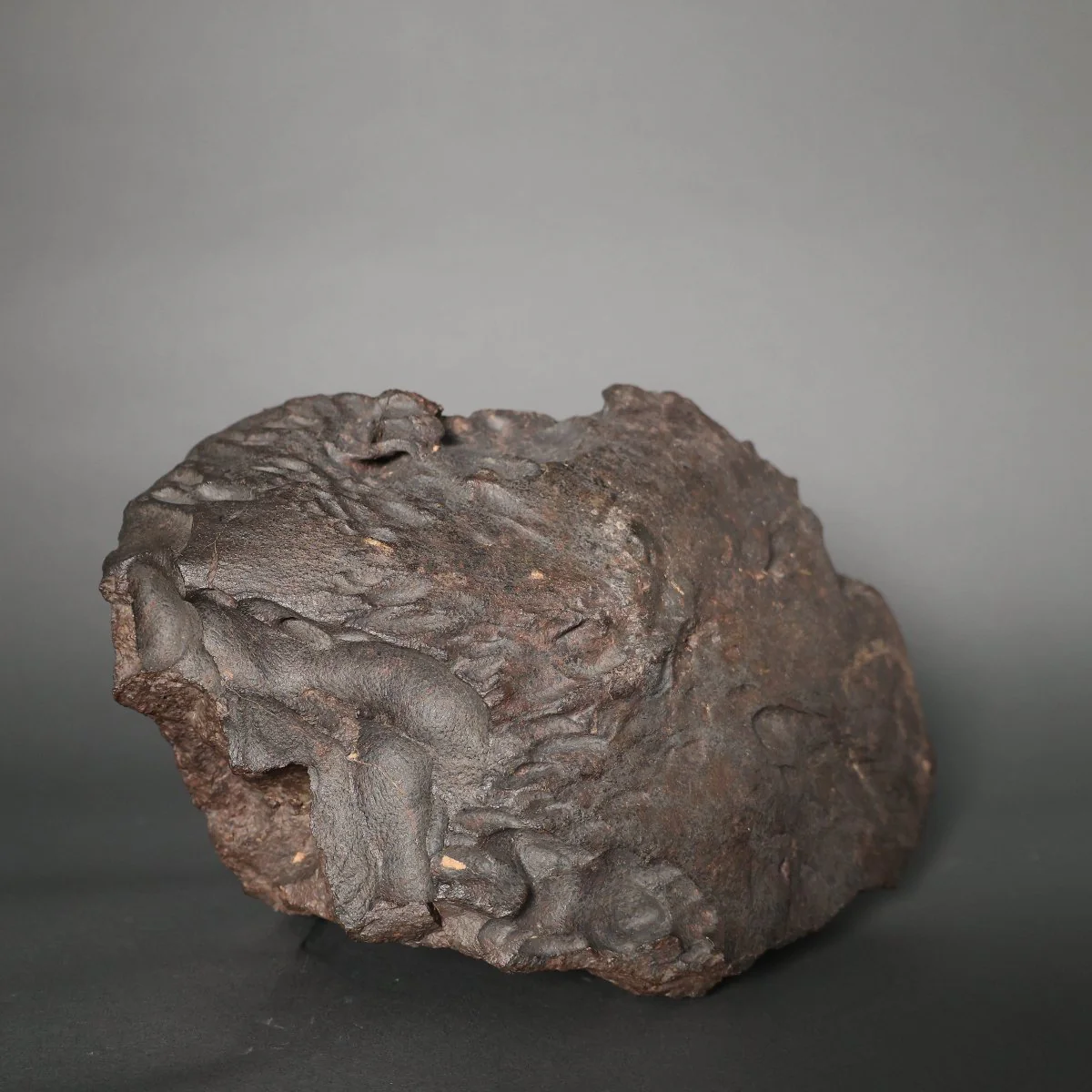
This 24.7 kilogram oriented shield chondrite is an exceptional specimen at the intersection of planetary science, aesthetic form, and natural history. As a complete, fusion-crusted individual exhibiting rare aerodynamic orientation, it stands among the most visually and scientifically compelling meteorites ever made available to collectors or institutions. Fewer than one in a thousand meteorites display such features—indications that the body maintained a stable, singular orientation during atmospheric entry.
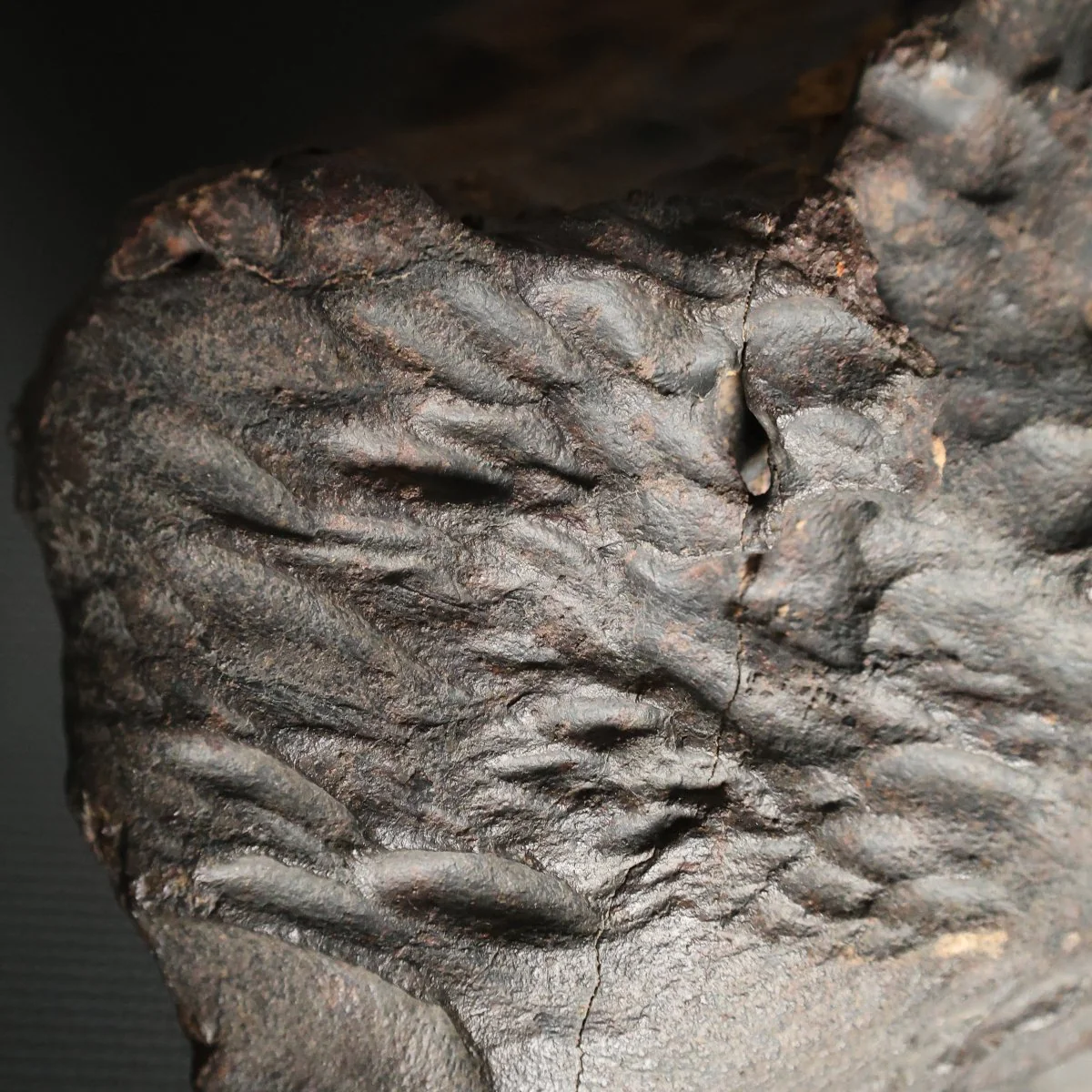
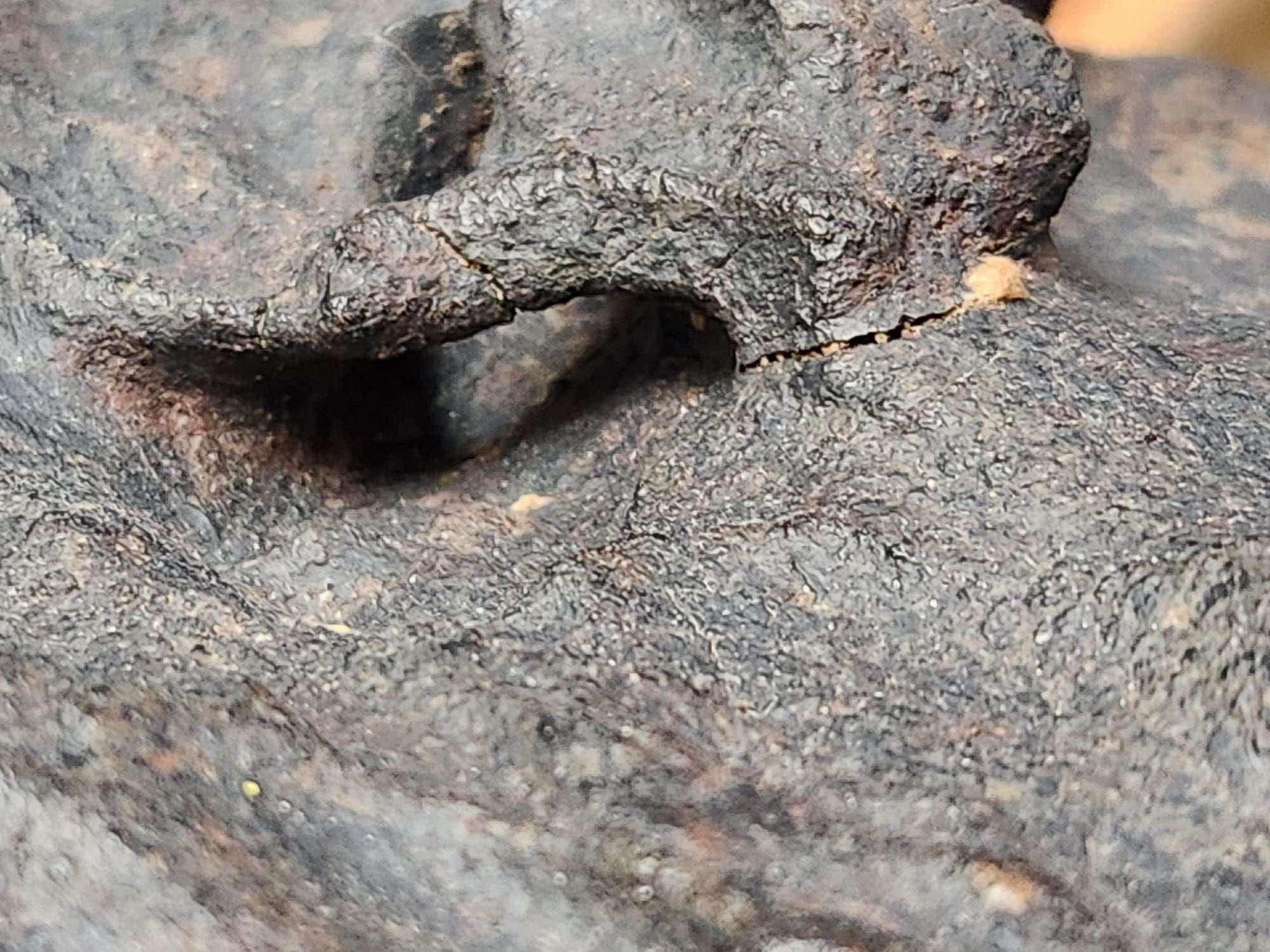
Descending at speeds exceeding 40,000 km/h, the meteorite’s leading face was exposed to intense frictional heating, reaching temperatures of approximately 1,500°C (2,800°F). This caused surface melting and the formation of a protective ablative layer—what is known as a natural heat shield. From its center radiate exquisite fluting and flowlines, features sculpted by molten material streaming backward under immense thermal stress, not unlike rain driven up the windshield of a moving vehicle. The entire morphology was flash-frozen in mid-flight as the object decelerated to terminal velocity, roughly 300 km/h, preserving its aerodynamic symmetry and flow-patterns in striking detail.
It is quite simply a once-in-a-generation acquisition. While other oriented meteorites do exist in both private and institutional collections, specimens of this size, intact preservation, and pronounced shield morphology are exceedingly rare. Its condition and features make it suitable for advanced private collectors and public collections alike.
Classification & Provenance
Type: H4-6 Ordinary Chondrite
Classification: University of Minnesota, under Dr. Jennifer Mitchell (pending approval)
Coordinates: 22.016228°N, 5.702543°E
Discovery: Tamanrasset Region, Southern Algeria | 2023
This specimen is classified as an H4-6 chondrite—indicating a transitional mix of thermal metamorphism across the stone, from relatively unaltered chondrules to more recrystallized regions. H-group chondrites are notable for their high metallic iron content, offering further insight into the early thermal history of the solar system. The specimen is currently under final review for entry into the Meteoritical Bulletin Database.

Details & Craftsmanship
Every detail has been carefully considered to bring you the perfect product.
Details & Craftsmanship
Every detail has been carefully considered to bring you the perfect product.
Details & Craftsmanship
Every detail has been carefully considered to bring you the perfect product.
Details & Craftsmanship
Every detail has been carefully considered to bring you the perfect product.

Details & Craftsmanship
Every detail has been carefully considered to bring you the perfect product.
Details & Craftsmanship
Every detail has been carefully considered to bring you the perfect product.
Details & Craftsmanship
Every detail has been carefully considered to bring you the perfect product.
Details & Craftsmanship
Every detail has been carefully considered to bring you the perfect product.
Description
This 24.7 kilogram oriented shield chondrite is an exceptional specimen at the intersection of planetary science, aesthetic form, and natural history. As a complete, fusion-crusted individual exhibiting rare aerodynamic orientation, it stands among the most visually and scientifically compelling meteorites ever made available to collectors or institutions. Fewer than one in a thousand meteorites display such features—indications that the body maintained a stable, singular orientation during atmospheric entry.
Descending at speeds exceeding 40,000 km/h, the meteorite’s leading face was exposed to intense frictional heating, reaching temperatures of approximately 1,500°C (2,800°F). This caused surface melting and the formation of a protective ablative layer—what is known as a natural heat shield. From its center radiate exquisite fluting and flowlines, features sculpted by molten material streaming backward under immense thermal stress, not unlike rain driven up the windshield of a moving vehicle. The entire morphology was flash-frozen in mid-flight as the object decelerated to terminal velocity, roughly 300 km/h, preserving its aerodynamic symmetry and flow-patterns in striking detail.
It is quite simply a once-in-a-generation acquisition. While other oriented meteorites do exist in both private and institutional collections, specimens of this size, intact preservation, and pronounced shield morphology are exceedingly rare. Its condition and features make it suitable for advanced private collectors and public collections alike.
Classification & Provenance
Type: H4-6 Ordinary Chondrite
Classification: University of Minnesota, under Dr. Jennifer Mitchell (pending approval)
Coordinates: 22.016228°N, 5.702543°E
Discovery: Tamanrasset Region, Southern Algeria | 2023
This specimen is classified as an H4-6 chondrite—indicating a transitional mix of thermal metamorphism across the stone, from relatively unaltered chondrules to more recrystallized regions. H-group chondrites are notable for their high metallic iron content, offering further insight into the early thermal history of the solar system. The specimen is currently under final review for entry into the Meteoritical Bulletin Database.