Original: $42,000.00
-70%$42,000.00
$12,600.00The Story
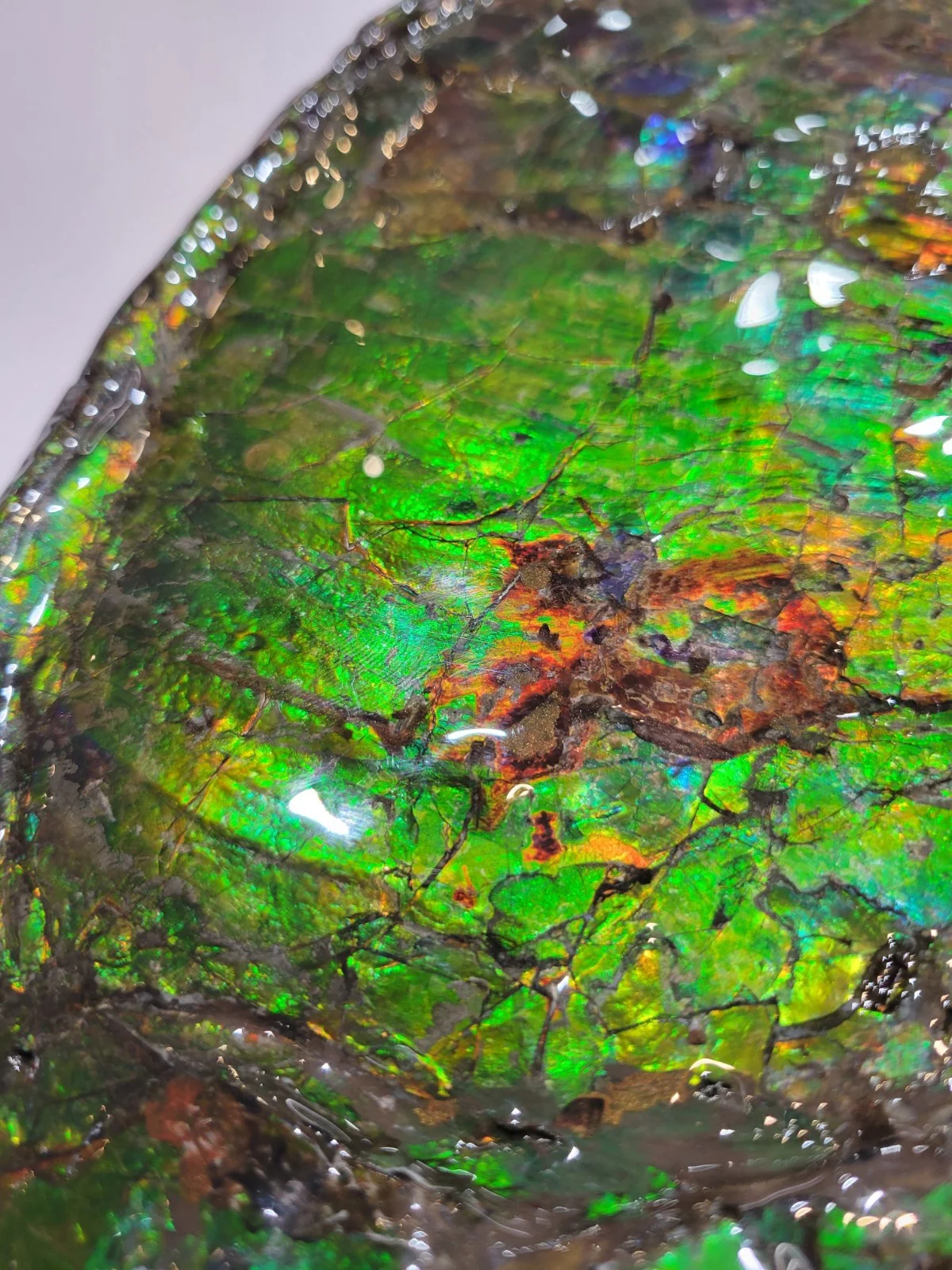
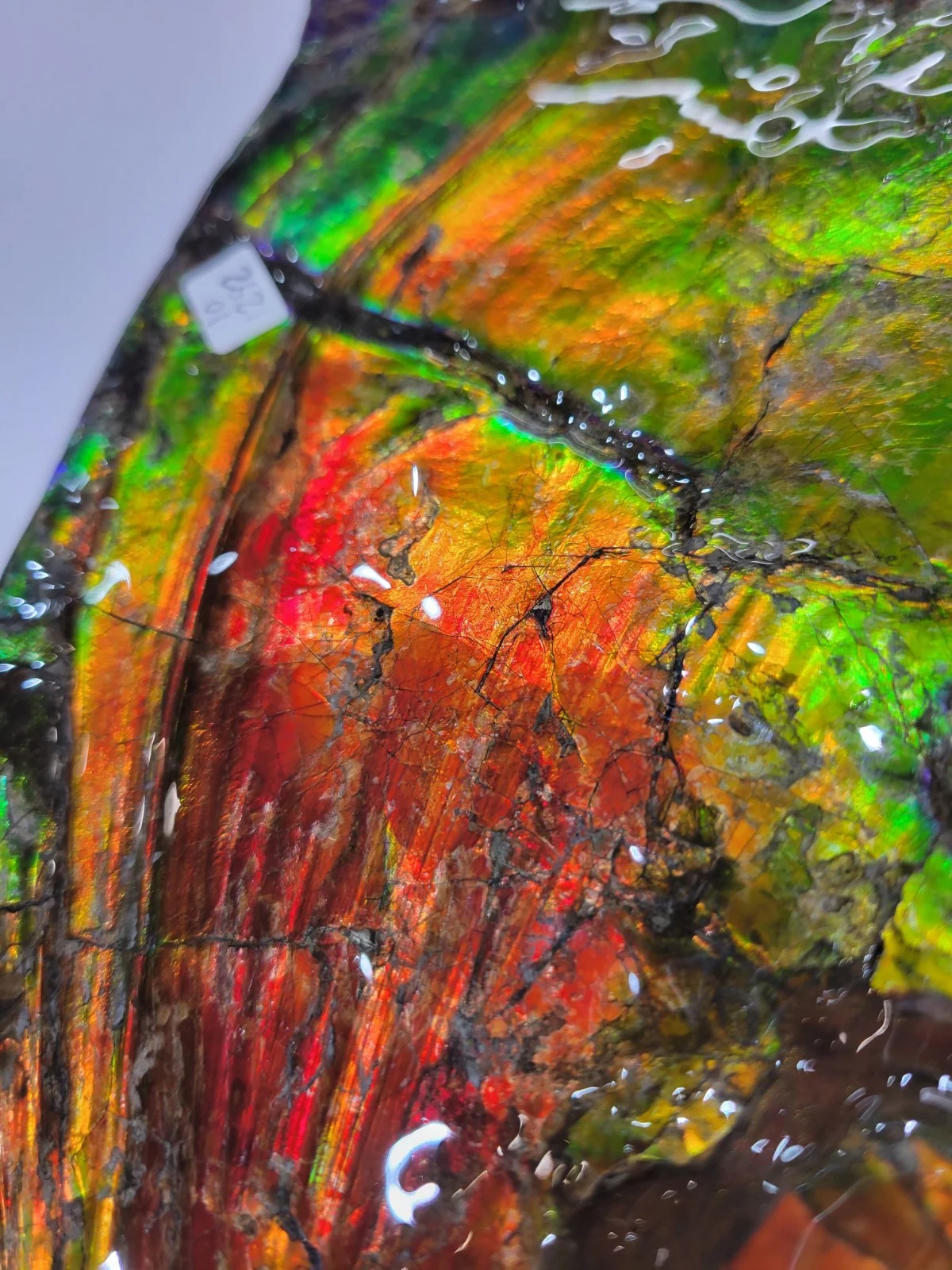
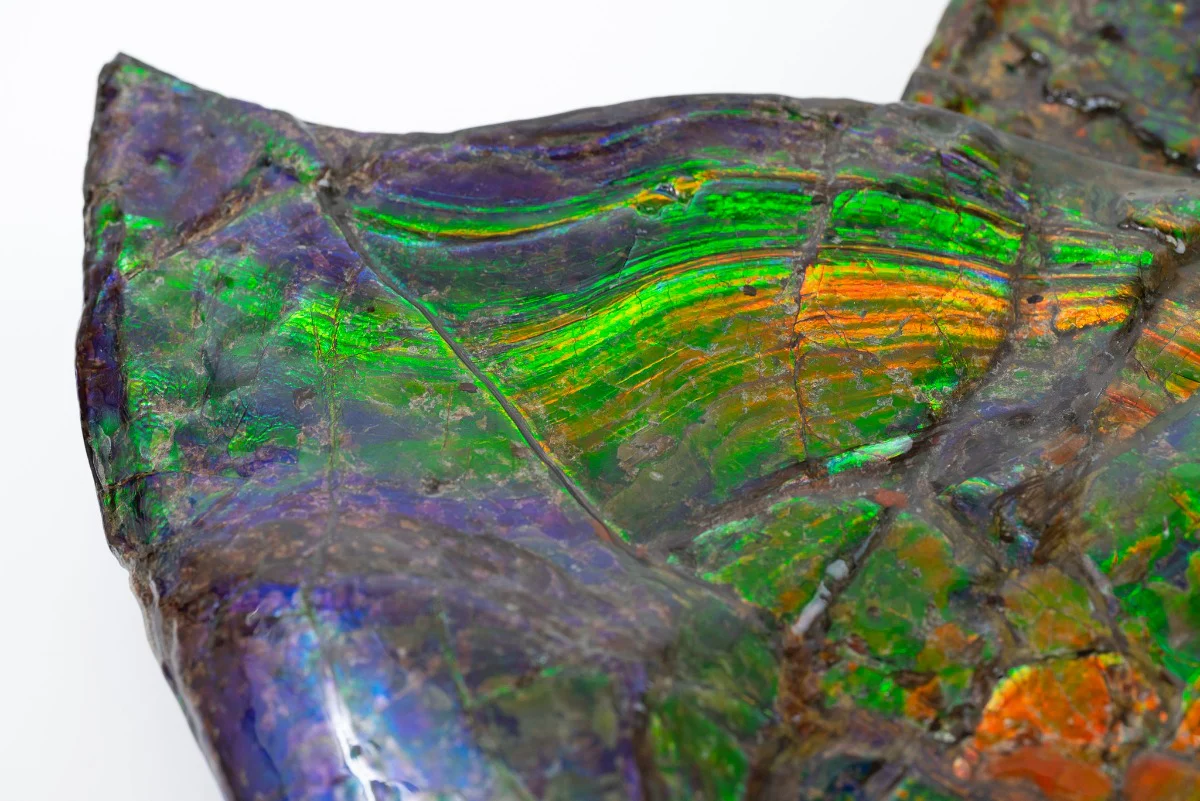
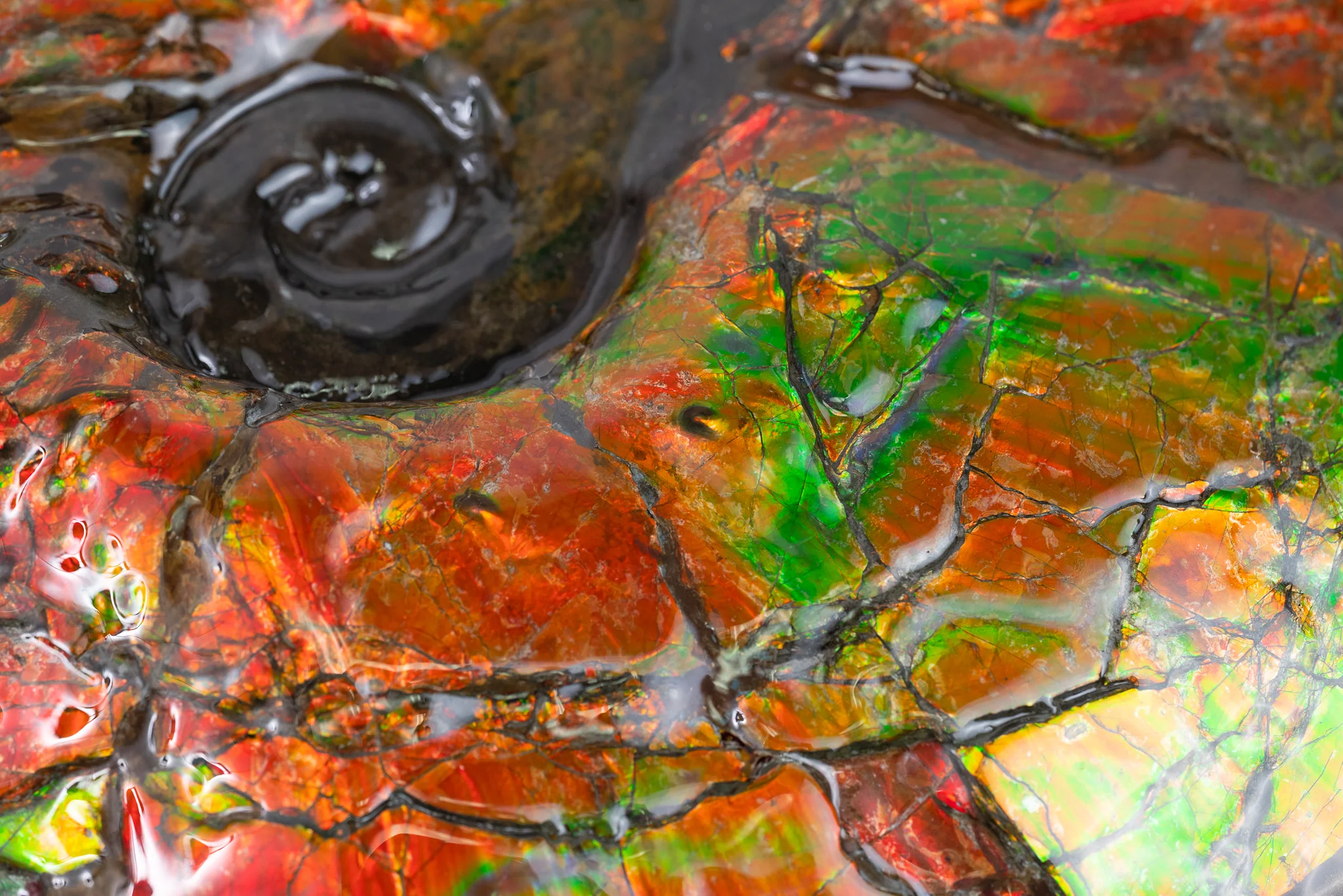
This large Placenticeras costatum specimen is a stunning example of the famous iridescent ammonites from Canada - its shell is preserved with extremely bright, gorgeous ammolite.
Ammolite is a rare, opal-like gemstone found only in Alberta's Upper Cretaceous Bearpaw formation, just east of the Rocky Mountains. This phenomenal specimen displays hints of blues and purples on both sides and also has areas with reds, oranges, golds and greens. It has a very aesthetic overall shape and fine shell details are present on both sides. Complete specimens like this, especially with such intense hues, high lustre, and variety colours, are rare and highly sought-after.
- Government Registration number: 10(1282)
- Size: Width 49.5 cm; Height 42 cm; Max Thickness 5 cm; Weight: 6.4 kg
- Deposit: Bearpaw Formation
- Location: Southern Alberta, Canada
- Age: Late Cretaceous (71 million years old)
- Certificate of authenticity included
- Can be shipped internationally
- Custom display stand included
Contact Us for more information.
Ammonites belong to the Mollusca Phylum in a Class known as Cephalopods – “head-footed” creatures such as octopus and squid. They swam in ancient oceans from 400 million years ago, to their extinction, along with the dinosaurs, 65 million years ago.
Ammonites were free floating invertebrates that were attacked by plesiosaurs and mosasaurs, two groups of gigantic marine reptiles. One way that ammonites could avoid an attack was to quickly change their buoyancy levels, zig zagging and sinking rapidly.
These incredible prehistoric animals ranged in size from tiny species only a few centimetres in diameter to the monstrous Cretaceous ammonite, Parapuzosia seppenradensis, which grew to about 3 meters and would probably weigh close to 1500 kilograms!

Details & Craftsmanship
Every detail has been carefully considered to bring you the perfect product.

Details & Craftsmanship
Every detail has been carefully considered to bring you the perfect product.

Details & Craftsmanship
Every detail has been carefully considered to bring you the perfect product.

Details & Craftsmanship
Every detail has been carefully considered to bring you the perfect product.

Details & Craftsmanship
Every detail has been carefully considered to bring you the perfect product.

Details & Craftsmanship
Every detail has been carefully considered to bring you the perfect product.

Details & Craftsmanship
Every detail has been carefully considered to bring you the perfect product.
Details & Craftsmanship
Every detail has been carefully considered to bring you the perfect product.
Details & Craftsmanship
Every detail has been carefully considered to bring you the perfect product.

Details & Craftsmanship
Every detail has been carefully considered to bring you the perfect product.

Details & Craftsmanship
Every detail has been carefully considered to bring you the perfect product.

Details & Craftsmanship
Every detail has been carefully considered to bring you the perfect product.
Details & Craftsmanship
Every detail has been carefully considered to bring you the perfect product.

Details & Craftsmanship
Every detail has been carefully considered to bring you the perfect product.
Details & Craftsmanship
Every detail has been carefully considered to bring you the perfect product.

Details & Craftsmanship
Every detail has been carefully considered to bring you the perfect product.
Description
This large Placenticeras costatum specimen is a stunning example of the famous iridescent ammonites from Canada - its shell is preserved with extremely bright, gorgeous ammolite.
Ammolite is a rare, opal-like gemstone found only in Alberta's Upper Cretaceous Bearpaw formation, just east of the Rocky Mountains. This phenomenal specimen displays hints of blues and purples on both sides and also has areas with reds, oranges, golds and greens. It has a very aesthetic overall shape and fine shell details are present on both sides. Complete specimens like this, especially with such intense hues, high lustre, and variety colours, are rare and highly sought-after.
- Government Registration number: 10(1282)
- Size: Width 49.5 cm; Height 42 cm; Max Thickness 5 cm; Weight: 6.4 kg
- Deposit: Bearpaw Formation
- Location: Southern Alberta, Canada
- Age: Late Cretaceous (71 million years old)
- Certificate of authenticity included
- Can be shipped internationally
- Custom display stand included
Contact Us for more information.
Ammonites belong to the Mollusca Phylum in a Class known as Cephalopods – “head-footed” creatures such as octopus and squid. They swam in ancient oceans from 400 million years ago, to their extinction, along with the dinosaurs, 65 million years ago.
Ammonites were free floating invertebrates that were attacked by plesiosaurs and mosasaurs, two groups of gigantic marine reptiles. One way that ammonites could avoid an attack was to quickly change their buoyancy levels, zig zagging and sinking rapidly.
These incredible prehistoric animals ranged in size from tiny species only a few centimetres in diameter to the monstrous Cretaceous ammonite, Parapuzosia seppenradensis, which grew to about 3 meters and would probably weigh close to 1500 kilograms!